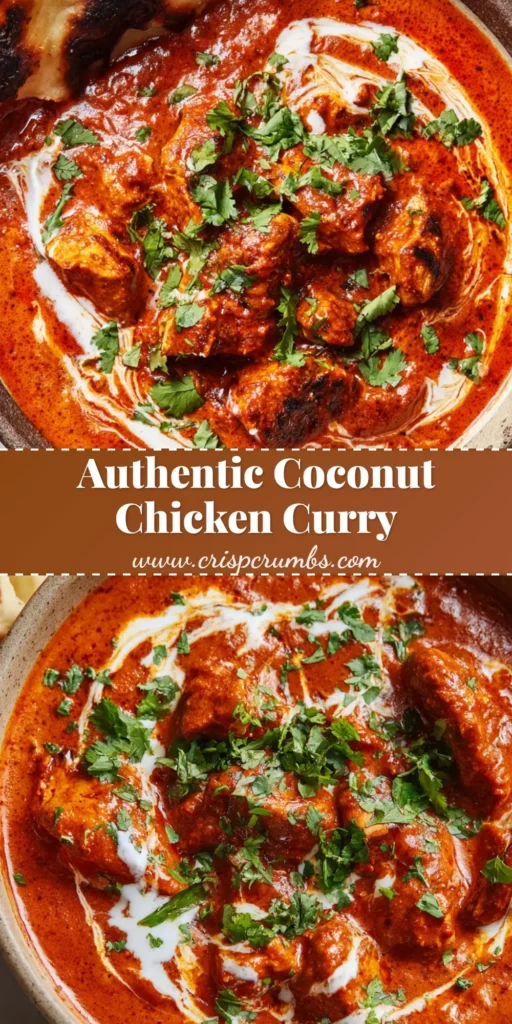
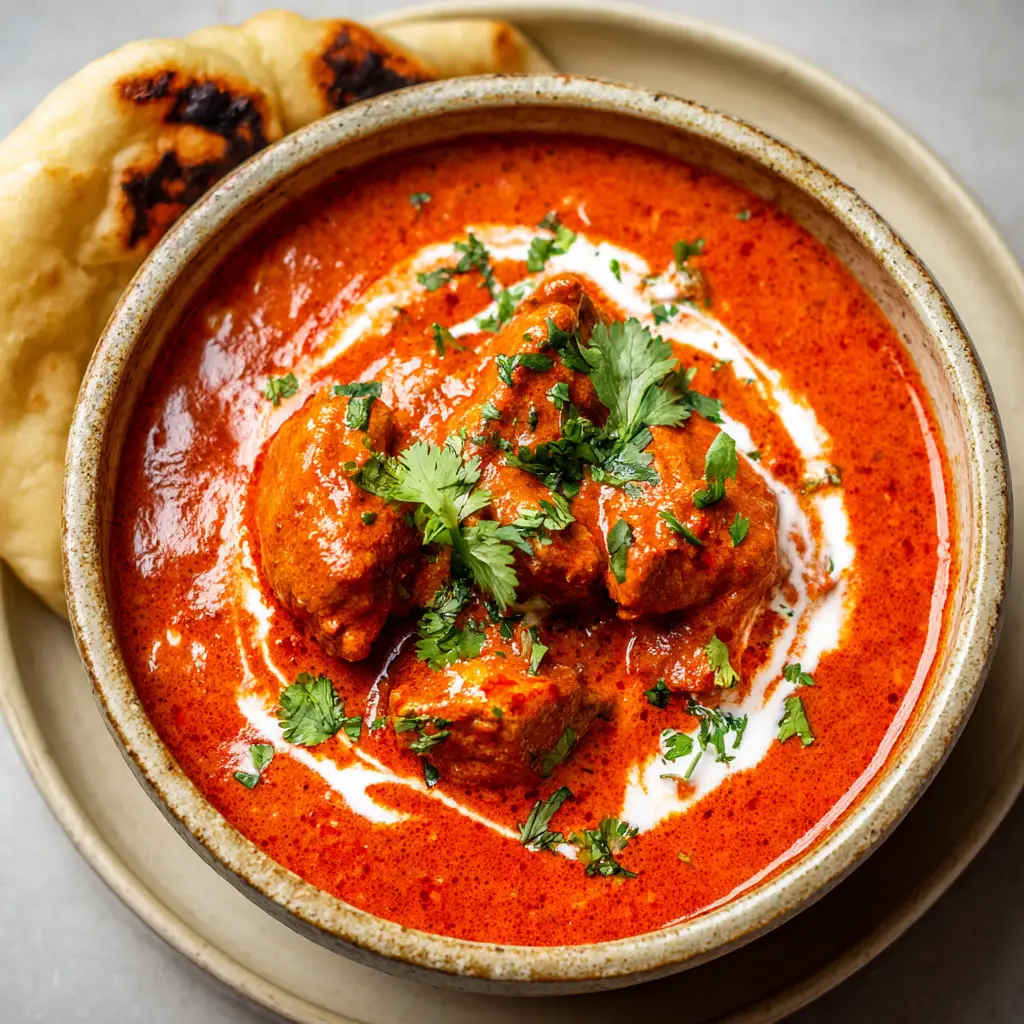
Indian Chicken Curry is a vibrant, soul-warming dish that brings restaurant-quality flavors directly to your home kitchen. Picture a close-up of a rustic ceramic bowl filled with an intensely rich, creamy orange-red sauce. The foundation of this masterpiece is a thick, perfectly spiced tomato and coconut milk blend that heavily coats tender, simmered chicken chunks.
Every spoonful delivers a deeply harmonious balance of aromatic spices and lush coconut fat. To achieve true visual and culinary perfection, the surface of the curry features a delicate swirl of white liquid coconut cream. This stunning contrast not only elevates the presentation but provides a cooling counterpoint to the vibrant spices.
A generous garnish of freshly chopped green cilantro leaves adds a bright, herbaceous pop of color and flavor. Finally, a piece of slightly charred, warm flatbread rests effortlessly on the edge of the bowl, just waiting to scoop up every last drop of the thick sauce. Creating this precise culinary experience is entirely achievable with the right techniques.
Why This Visual and Culinary Masterpiece Delivers Every Time
- Vibrant Emulsion: The thick orange-red spiced tomato coconut sauce is scientifically balanced to prevent separation, ensuring a luxurious, velvety mouthfeel in every bite.
- Juicy Proteins: The carefully simmered chicken chunks undergo a preliminary sear to lock in savory depth before gently finishing in the sauce.
- Textural Contrast: A delicate swirl of white liquid coconut cream cuts through the acidic tomato base, offering layered temperature and flavor dynamics.
- Aromatic Finish: Freshly chopped green cilantro provides vital natural aldehydes that cut through the richness of the coconut milk.
- The Perfect Vessel: Serving this with a slightly charred warm flatbread provides the necessary structural integrity for scooping without the bread disintegrating.
Essential Foundations for the Spiced Tomato Coconut Base
Boneless Skinless Chicken: You will need 1.5 lbs (680g) of chicken breasts or thighs, cut into uniform chunks. This foundational ingredient provides the structural bite and absorbs the aromatic spices during the gentle simmer.
Full-Fat Coconut Milk: Use 1 can (13.5 oz / 400ml) of premium full-fat coconut milk. Do not shake the can prior to opening; you must extract the thick white cream from the top to reserve for your delicate visual swirl.
Crushed Tomatoes: Adding 1.5 cups (360ml) of high-quality crushed tomatoes builds the acidic, robust backbone of the dish. When combined with the turmeric, this creates the signature thick orange-red hue.
Aromatic Base (Onion, Garlic, Ginger): Finely dice 1 medium yellow onion (150g), mince 4 cloves of garlic (12g), and grate 1 tbsp (15g) of fresh ginger. These foundational ingredients release critical volatile oils when cooked in fat, perfuming the entire sauce.
Signature Spice Blend: Combine 1 tbsp (15g) garam masala, 1 tsp (5g) ground turmeric, 1 tsp (5g) smoked paprika, and 1 tsp (5g) ground cumin. The turmeric and paprika are scientifically required to pigment the sauce to its characteristic vibrant orange-red state.
Olive Oil & Kosher Salt: Use 2 tbsp (30ml) of olive oil and 1.5 tsp (8g) of kosher salt. These are your essential invisible ingredients required to trigger the Maillard browning on the chicken and properly season the dish from within.
Fresh Cilantro & Flatbread: Reserve 1/4 cup (15g) of freshly chopped green cilantro for the garnish. Procure 4 pieces of high-quality flatbread or naan to be warmed and slightly charred right before serving.
Kitchen Gear for a Silky, Restaurant-Quality Finish
To recreate the exact texture of this Indian Chicken Curry, you need a heavy-bottomed cast iron skillet or a ceramic-coated Dutch oven. Heavy-bottomed cookware ensures even heat distribution, preventing the coconut milk proteins from scorching.
A sharp chef’s knife and a solid cutting board are vital for cubing the meat into uniform, bite-sized pieces. Uniformity ensures the simmered chicken chunks cook evenly without drying out.
Keep a sturdy wooden spoon on hand for deglazing the pan. Scraping up the browned bits (fond) from the chicken sear incorporates vital savory flavors directly into the thick orange-red spiced tomato coconut sauce.
Executing the Perfect Indian Chicken Curry Sauce
Searing the Golden-Brown Chicken Chunks
Heat 1 tbsp (15ml) of olive oil in your skillet over medium-high heat. Add the cubed chicken, ensuring they are placed in a single, uncrowded layer. Allow them to sear undisturbed for 3-4 minutes until a visible deep golden-brown crust forms.
This localized dehydration triggers the Maillard reaction, developing complex savory notes. Once browned, remove the partially cooked chicken from the pan and set it aside; it will finish cooking gently later to remain tender.
Blooming the Aromatics and Spices
Lower the heat to medium and add the remaining 1 tbsp (15ml) of olive oil to the skillet. Sauté the diced onion for 5 minutes until translucent and soft. Stir in the minced garlic and grated ginger, cooking for exactly 60 seconds until deeply fragrant.
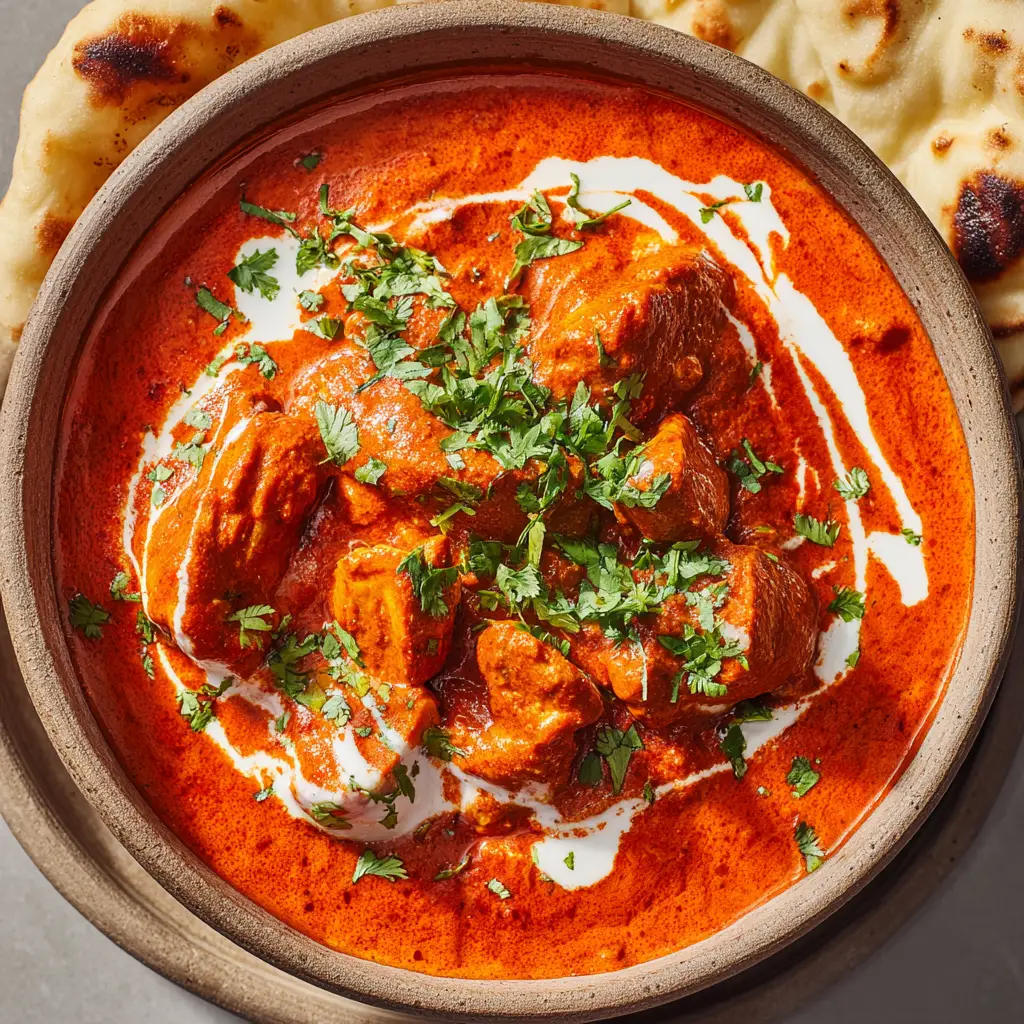
Introduce your spice blend—garam masala, turmeric, paprika, and cumin—into the hot oil. Stir continuously for 30 seconds. This process, known as blooming, extracts the fat-soluble flavor compounds and establishes the vibrant color base.
Simmering the Vibrant Orange-Red Sauce
Pour in the crushed tomatoes, using your wooden spoon to deglaze the bottom of the skillet. Next, open your unshaken can of coconut milk and carefully scoop out 2 tbsp (30ml) of the thick white cream from the top; set this aside for your final garnish.
Pour the remaining coconut milk and liquid into the skillet. Stir thoroughly until the acidic tomatoes and fat-rich coconut milk emulsify into a beautiful, thick orange-red liquid. Bring the mixture to a very gentle bubble.
Marrying the Flavors for Maximum Tenderness
Return the browned chicken to the skillet, folding it gently into the sauce. Reduce the heat to low, cover, and let it simmer gently for 12-15 minutes. The low temperature prevents the coconut milk from separating while allowing the chicken to cook through.
Listen for a soft, rhythmic bubbling. Visually verify that the sauce has reduced slightly and heavily coats the back of your wooden spoon. The simmered chicken chunks should read 165°F (74°C) internally.
Charring the Flatbread and Final Plating
While the curry rests for 3 minutes, place your flatbread over an open gas stove flame or in a hot, dry skillet for 30-45 seconds per side. Look for the visual cue of slightly charred, blistered pockets forming on the warm flatbread.
Ladle the rich curry into a rustic ceramic bowl. Take your reserved coconut cream and create a delicate swirl of white liquid coconut cream across the surface. Garnish immediately with the freshly chopped green cilantro leaves, and rest the charred flatbread on the edge of the bowl.
Expert Troubleshooting for a Flawless Dining Experience
- Sauce Separation: If your thick orange-red sauce breaks or looks oily, your heat was too high. Always maintain a gentle simmer once the coconut milk is added.
- Tough Chicken: Avoid boiling the curry rapidly. Simmered chicken chunks require low, slow heat to remain succulent and juicy.
- Dull Color: Ensure you bloom your spices in the hot oil before adding liquids. This releases the maximum pigment from the turmeric and paprika.
- Flat Flavor: If the curry tastes one-dimensional, add an extra pinch of kosher salt or a tiny squeeze of fresh lime juice right at the end to wake up the spices.
Preserving Your Spiced Tomato Coconut Base
This Indian Chicken Curry makes exceptional leftovers as the spices continue to meld overnight. Allow the dish to cool completely before transferring it to an airtight glass container.
Store in the refrigerator for up to 4 days. When reheating, do so gently on the stovetop over low heat, adding a splash of water or extra coconut milk to restore the thick orange-red spiced tomato coconut sauce to its original velvety texture.
You can freeze the curry base and chicken for up to 3 months. However, wait to add the fresh cilantro and the delicate swirl of white liquid coconut cream until after you have thawed and reheated the dish.
Ultimate Pairings to Elevate Your Indian Chicken Curry
While this dish shines beautifully on its own, adding complementary sides transforms it into a feast. For an unexpected but delightful fusion, consider serving it alongside our garlic butter shrimp rice bake. The buttery seafood notes contrast incredibly well with the earthy, spiced tomato sauce.
If you are hosting a larger gathering and want to offer a variety of deeply spiced global flavors, set up a buffet featuring this chicken curry alongside our exquisite creamy cardamom lamb curry. The dual presentation of poultry and red meat caters to all guests.
For pescatarian diners joining your table, provide our yellow curry poached cod as an alternative main dish. To round out the entire menu with complementary Middle Eastern flair, our chicken shawarma recipe makes for an incredible appetizer wrap.
Answering Your Biggest Culinary Questions
Yes, you can absolutely use boneless skinless chicken breasts. However, chicken thighs naturally contain more fat and remain slightly juicier during the simmering process. If using breasts, be careful not to overcook them.
Do not shake your can of full-fat coconut milk before opening. Carefully scoop out 2 tablespoons of the thick, solid white cream resting at the top of the can. Drizzle this unheated cream over the hot curry just before serving.
To prevent separation, ensure you lower the heat to a very gentle simmer before adding the coconut milk. High, rapid boiling denatures the proteins in the coconut milk, which causes the fats to separate and break the emulsion.
The best method is to use metal tongs to hold the flatbread directly over an open gas stove flame for 10 to 15 seconds per side. Alternatively, press the flatbread into a screaming hot, dry cast-iron skillet until blistered pockets appear.
The vibrant orange-red hue comes from blooming the turmeric and smoked paprika in hot oil, which releases their fat-soluble pigments. Always sauté your spices for 30 seconds in the oil before adding your crushed tomatoes.
The Ultimate Creamy Curry Blueprint
Indian Chicken Curry: Authentic Creamy Tomato Coconut Sauce
Ingredients
Equipment
Method
- Heat 1 tbsp (15ml) of olive oil in a skillet over medium-high heat. Add the cubed chicken in a single layer. Sear for 3-4 minutes until a deep golden-brown crust forms. Remove chicken and set aside.
- Lower heat to medium. Add remaining 1 tbsp (15ml) olive oil. Sauté the diced onion for 5 minutes until soft. Stir in minced garlic and grated ginger for 60 seconds. Add garam masala, turmeric, paprika, and cumin, stirring continuously for 30 seconds to bloom the spices.
- Pour in the crushed tomatoes and deglaze the skillet. Open the unshaken can of coconut milk. Scoop out and reserve 2 tbsp (30ml) of the thick white cream for garnishing. Pour the remaining milk into the skillet. Stir until the sauce turns a thick orange-red hue and bring to a gentle bubble.
- Return the browned chicken to the skillet. Reduce heat to low, cover, and gently simmer for 12-15 minutes until the chicken is tender and cooked to 165°F (74°C).
- Toast the flatbread over an open flame or in a hot skillet for 30-45 seconds per side until slightly charred. Ladle the curry into bowls, drizzle the reserved white coconut cream on top, and garnish with freshly chopped green cilantro.
Notes
Ensure your simmer is very gentle to prevent the coconut milk from separating.
Share Your Spiced Curry Masterpiece
There is nothing quite like recreating a visually stunning, restaurant-quality Indian Chicken Curry in your own home. When you pull off that perfect swirl of white liquid coconut cream and serve it with your charred flatbread, you’ll want to show it off.
If you loved this thick orange-red spiced tomato coconut sauce, please drop a comment below and leave a 5-star rating! Don’t forget to snap a photo of your rustic ceramic bowl and share it with us by pinning it to Pinterest. Subscribe to our newsletter for more incredible culinary deep dives.