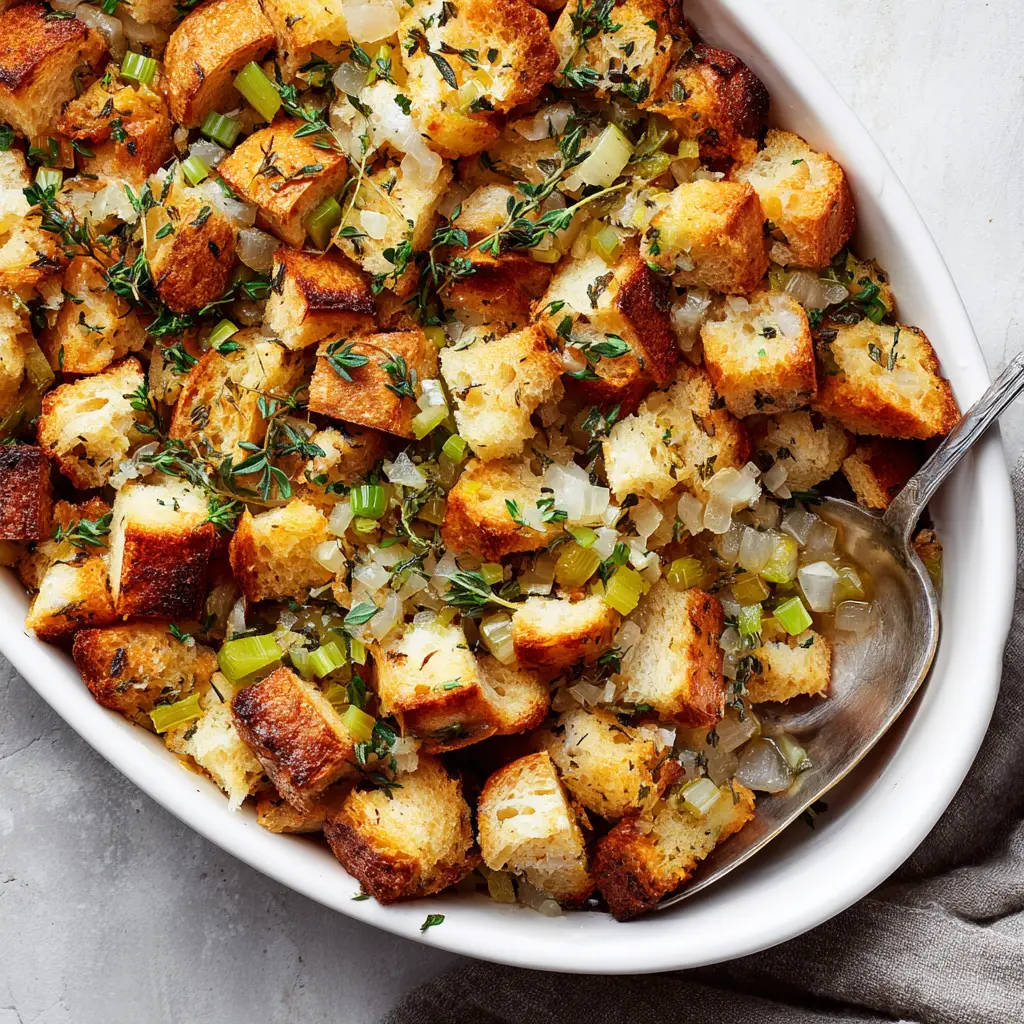
There is nothing quite as comforting as pulling a stunning, freshly baked Homemade Stuffing Recipe out of the oven. The sheer visual contrast of crisp, golden-brown bread cubes sitting atop a moist, savory foundation is enough to make anyone’s mouth water. This dish brings together rustic textures and deeply layered herbaceous flavors for a truly unforgettable culinary experience.
When you dig a silver serving spoon into the center of this oval white ceramic casserole dish, the magic is instantly revealed. A soft, steaming interior emerges, heavily speckled with finely chopped green herbs that perfume the entire kitchen. Whether you are hosting a holiday feast or craving a comforting weekend side, this dish delivers on every sensory level.
Crafting the perfect Homemade Stuffing Recipe is both an art and a science. It requires balancing the hydration of the bread with the richness of the butter and broth. Let’s dive into the professional techniques required to achieve those coveted charred edges and glistening, translucent aromatics.
Why This Savory Herb and Bread Bake Steals the Show
A truly exceptional holiday side dish lives and dies by its contrasting textures. This particular preparation is designed to maximize both the crunch of the surface and the tender, custard-like consistency of the lower sections. Every single bite offers a dynamic mouthfeel.
Here is what makes this specific preparation completely irresistible:
- Dual-Textured Crumb Structure: The irregular, rustic cubes of toasted white and wheat bread absorb the broth at different rates, ensuring a varied texture.
- Aromatic Depth: The glistening, translucent diced onions and vibrant green chunks of cooked celery provide a sweet, earthy foundation.
- Herbaceous Brightness: The dish is heavily speckled with finely chopped fresh green herbs, ensuring pops of sage, thyme, and flat-leaf parsley in every forkful.
- Golden Char: Baking uncovered allows the top surface of the bread cubes to develop crisp, slightly charred edges.
- Luxurious Base: The lower sections remain moist and perfectly soaked in a rich, savory broth.
The Culinary Building Blocks for a Flawless Crumb Structure
Great cooking relies entirely on the quality and preparation of the raw materials. For this dish, every component serves a distinct structural or flavor purpose. Understanding these roles is key to mastering the Homemade Stuffing Recipe.
Rustic White and Wheat Bread: Using a combination of 8 cups (400g) white bread and 4 cups (200g) wheat bread provides visual contrast and complex flavors. Tearing them into irregular shapes creates more surface area for the crispy edges to form.
Unsalted Butter: You will need 3/4 cup (170g) of high-quality unsalted butter to carry the flavor. The butter fat coats the vibrant green chunks of celery and helps the onions sweat without browning.
Yellow Onions: Exactly 2 cups (300g) of diced yellow onions will soften into glistening, translucent jewels. They provide a foundational sweetness that balances the savory herbs.
Fresh Celery: Using 1.5 cups (225g) of fresh celery yields those visually striking, vibrant green chunks. Cooking them gently ensures they retain a slight structural bite.
Fresh Sage: About 2 tablespoons (8g) of chopped fresh sage introduces a robust, earthy aroma. Sage is the quintessential flavor anchor for any holiday bread casserole.
Fresh Thyme Leaves: Adding 1 tablespoon (4g) of fresh thyme leaves brings a subtle, lemony pepperiness. The tiny leaves weave beautifully through the rustic bread cubes.
Flat-Leaf Parsley: A generous 1/4 cup (15g) of chopped flat-leaf parsley adds necessary visual speckling and fresh, grassy notes. It cuts through the richness of the butter and broth.
Savory Chicken or Vegetable Broth: You will need 2.5 cups (600ml) of warm, savory broth to hydrate the lower sections of the dish. The warmth helps the bread absorb the liquid efficiently.
Large Eggs (The Invisible Binder): Incorporating 2 large eggs (100g), beaten, is scientifically crucial for the dish’s structure. The proteins coagulate during baking, turning the moist lower sections into a cohesive, sliceable interior.
Kosher Salt and Black Pepper: Approximately 1.5 teaspoons (9g) of kosher salt and 1 teaspoon (2g) of freshly cracked black pepper will awaken all the flavors. Proper seasoning is non-negotiable for a savory flavor profile.
Must-Have Tools for Baking and Serving
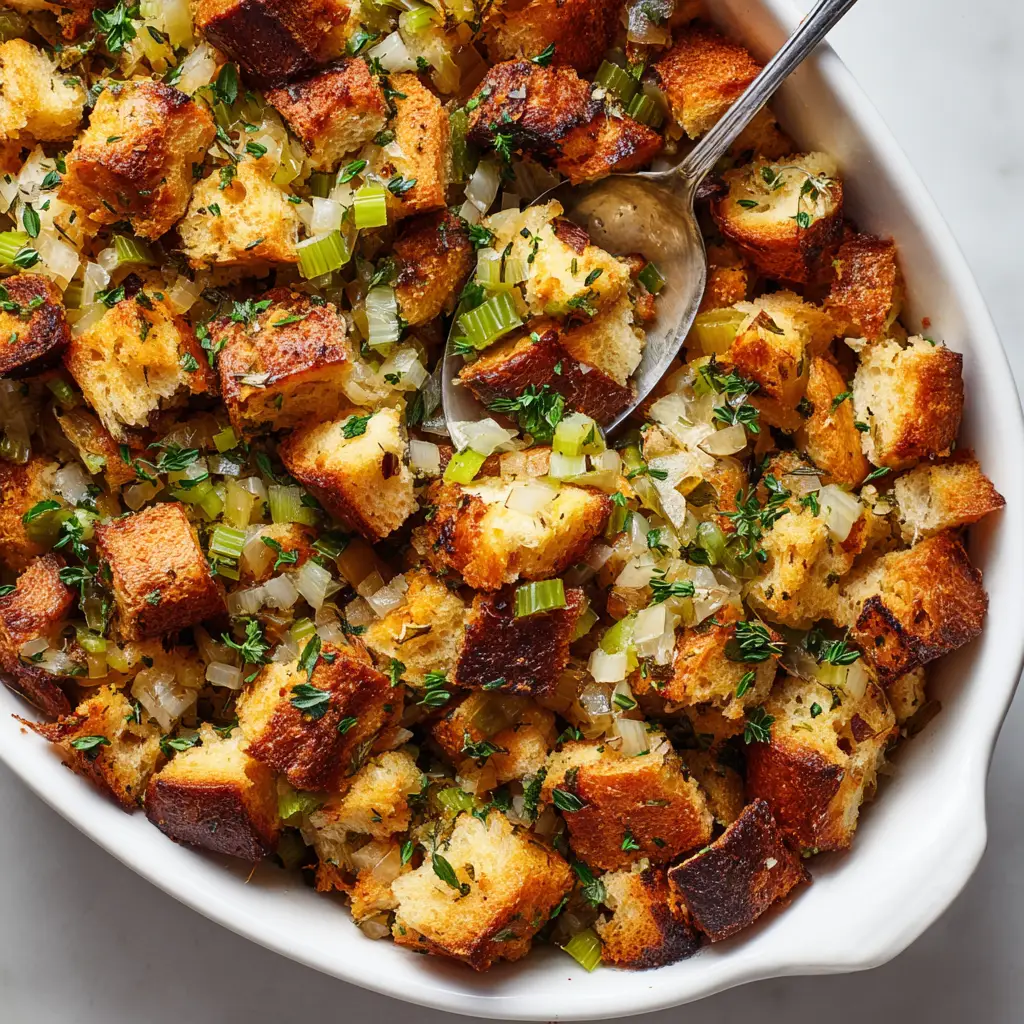
To recreate the exact visual presentation and texture described, specific equipment is necessary. The vessel you bake in dictates how the heat distributes through the moist lower layers.
You will need a classic oval white ceramic casserole dish, preferably 2.5 to 3 quarts in capacity. The ceramic material retains heat beautifully, ensuring the sides get a slight crust while the center steams perfectly.
A large, heavy-bottomed skillet or Dutch oven is required for sweating the vegetables. You will also need a silver serving spoon to break through that top crust and serve the soft, steaming interior directly at the table.
Professional Techniques for Building Deep Savory Flavors
Executing this Homemade Stuffing Recipe is all about timing and temperature control. Follow these meticulous steps to ensure every visual and sensory cue is hit perfectly.
Drying and Toasting the Irregular Loaves
Begin by preheating your oven to 275°F (135°C). Cut or tear your white and wheat bread into irregular, rustic cubes to maximize those jagged edges that crisp up so beautifully.
Spread the 12 cups (600g) of bread cubes evenly across two large rimmed baking sheets. Bake them for 45 to 50 minutes, tossing halfway through, until they are completely dried out and sound hollow when tapped.
Remove the pans from the oven and let the bread cool to room temperature. This crucial drying step prevents the bread from turning into mush when introduced to the savory broth later.
Sweating the Aromatics to Glistening Perfection
Increase your oven temperature to 375°F (190°C). In your large skillet, melt the 3/4 cup (170g) of unsalted butter over medium-low heat until it begins to foam gently.
Add the 2 cups (300g) of diced onions and 1.5 cups (225g) of chopped celery to the foaming butter. Sauté them slowly for 10 to 12 minutes.
Watch carefully for the visual cues: the onions must become glistening and translucent, while the celery should remain vibrant green chunks. Do not let them brown, as this alters the delicate flavor profile.
Blooming the Fresh Green Herbs
Once the vegetables are perfectly softened, it is time to introduce the aromatics. Add the 2 tablespoons (8g) of chopped fresh sage and 1 tablespoon (4g) of fresh thyme leaves directly to the warm butter.
Stir the mixture constantly for about 60 seconds. You will immediately notice a deeply fragrant, earthy smell wafting from the skillet as the hot butter extracts the volatile oils from the herbs.
Remove the skillet from the heat entirely. Stir in the 1/4 cup (15g) of chopped flat-leaf parsley, ensuring the vegetables become heavily speckled with the green herbs.
Assembling the Broth and Egg Foundation
In an oversized mixing bowl, combine the toasted, irregular rustic bread cubes with the warm vegetable and herb butter mixture. Toss gently to ensure the fat coats the bread evenly.
In a separate smaller bowl, briskly whisk together the 2.5 cups (600ml) of savory broth, the 2 large beaten eggs (100g), the kosher salt, and the black pepper. Pour this liquid foundation over the bread mixture in three stages.
Toss the mixture gently after each addition, allowing the lower sections of the bread to become moist and soaked. The top surface of the bread cubes should remain slightly drier to promote that golden-brown finish.
Baking for the Ultimate Charred Crust
Generously grease your oval white ceramic casserole dish with butter. Gently transfer the soaked bread mixture into the dish, taking care not to pack it down too tightly.
Bake uncovered on the middle rack for 40 to 45 minutes. You are looking for specific visual confirmation: the top surface of the bread cubes must feature crisp, golden-brown, and slightly charred edges.
When the baking time is complete, remove the dish and let it rest for 10 minutes. This resting period allows the soft, steaming interior to set, ensuring perfect portions when you dig your silver serving spoon into the center.
Pro Secrets for a Moist Interior and Crispy Top
Even the most experienced home cooks can encounter structural issues when baking savory bread puddings. Use these forensic culinary tips to guarantee success every time you prepare this dish.
- Never Use Fresh Bread: Fresh bread contains too much moisture and will collapse into a dense paste. Always dry your cubes thoroughly in the oven before starting.
- Regulate Broth Temperature: Ensure your savory broth is room temperature or slightly warm before whisking in the eggs. Hot broth will scramble the eggs prematurely.
- Avoid Over-Mixing: When tossing the bread with the liquid, use a light hand. Over-mixing will destroy the irregular, rustic shapes necessary for varied textures.
- The Foil Trick: If you notice the top surface getting charred edges too quickly, loosely tent the oval ceramic dish with aluminum foil for the final 15 minutes of baking.
Chilling, Freezing, and Reheating Your Leftovers
This savory dish is renowned for tasting incredibly deep and complex the next day. The herbs continue to mingle, and the broth fully hydrates every microscopic pocket of the bread crumb.
To store leftovers, allow the casserole to cool completely to room temperature. Wrap the oval white ceramic casserole dish tightly in plastic wrap and refrigerate for up to four days.
If you wish to freeze it, portion the cooled bake into airtight containers and freeze for up to two months. Thaw overnight in the refrigerator before attempting to reheat.
To reheat and restore the crisp top surface, place the portions in a 350°F (175°C) oven for 15-20 minutes. Avoid the microwave, as it will destroy the golden-brown crust and make the bread rubbery.
Spectacular Main Courses and Sides to Complete the Feast
While this recipe is a star on its own, it shines brightest when paired with complementary flavors and proteins. Building a cohesive menu elevates the entire dining experience.
For a spectacular Sunday dinner, try serving this alongside a rich meatloaf with mushroom gravy. The earthy mushrooms and savory gravy are perfect for dipping those crispy bread edges.
If you are looking for vibrant vegetable accompaniments, consider a warm winter vegetable casserole. The sweet root vegetables provide a wonderful contrast to the savory herbs in the bread.
For a nostalgic and deeply flavorful addition to your holiday table, a drizzle of authentic Italian gravy over the moist lower sections of the dish is life-changing.
Finally, to add a touch of sweetness to the savory spread, pair this meal with some garlic parmesan roasted sweet potatoes. The sweet and salty profile balances the herbaceous sage and thyme beautifully.
Frequently Discussed Culinary Queries
Absolutely. To make this a vegetarian side dish, simply substitute the chicken broth with a high-quality, rich vegetable broth. The rest of the foundational ingredients, like the butter and fresh herbs, remain exactly the same.
Yes. You can dry the bread cubes and chop all your vegetables 1-2 days in advance. You can also fully assemble the casserole, cover it tightly, and refrigerate it overnight before baking. Add an extra 10 minutes to the baking time if cooking straight from the fridge.
While an oval white ceramic casserole dish is highly recommended for its excellent heat retention and beautiful table presentation, any standard 9×13 inch baking dish will work. Ceramic or glass dishes yield the best golden-brown edges.
The secret to the crisp top surface is baking the dish uncovered. The exposed irregular bread cubes toast beautifully in the oven heat while the lower sections steam in the savory broth. If it browns too fast, you can tent it with foil near the end.
Soggy stuffing is usually the result of using fresh bread or adding too much broth. Always ensure your rustic bread cubes are completely dried out in the oven first, and add the savory broth mixture gradually so the bread absorbs it without turning to mush.
The Complete Step-by-Step Print Guide
Now that you understand the precise science behind sweating the aromatics and achieving that dual-texture crust, it is time to get cooking. Gather your irregular bread cubes and prepare your oval white ceramic casserole dish.
Follow the precise measurements and timing below to ensure your Homemade Stuffing Recipe looks exactly like the visual descriptions. Prepare your senses for the smell of blooming sage and browning butter.
The Ultimate Homemade Stuffing Recipe With Perfectly Crispy Edges
Ingredients
Equipment
Method
- Preheat oven to 275°F (135°C). Spread the irregular white and wheat bread cubes across two baking sheets. Bake for 45-50 minutes until dry, tossing halfway. Let cool.
- Increase oven to 375°F (190°C). Melt butter in a large skillet over medium-low heat. Add onions and celery, cooking for 10-12 minutes until onions are glistening and translucent.
- Stir in the fresh sage and thyme leaves for 60 seconds until fragrant. Remove from heat and stir in the flat-leaf parsley so the mix is heavily speckled.
- In a large bowl, toss the dried bread with the butter and vegetable mixture. In a separate bowl, whisk the broth, beaten eggs, salt, and pepper. Pour over the bread in three additions, tossing gently until the lower sections are moist.
- Transfer mixture to a buttered oval white ceramic casserole dish. Bake uncovered for 40-45 minutes until the top surface features crisp, golden-brown and slightly charred edges. Let rest 10 minutes before serving.
Notes
Tip 2. If the top gets too dark during baking, tent loosely with aluminum foil.
Join Our Community of Passionate Home Cooks
We hope this deeply savory, beautifully textured dish becomes a staple at your family gatherings. The satisfying crunch of the golden-brown edges combined with the soft, steaming interior is truly something special to experience.
If you achieved the perfect glistening onions and vibrant celery chunks, we want to hear about it! Drop a comment below detailing your experience with the recipe, and let us know what you served it with.
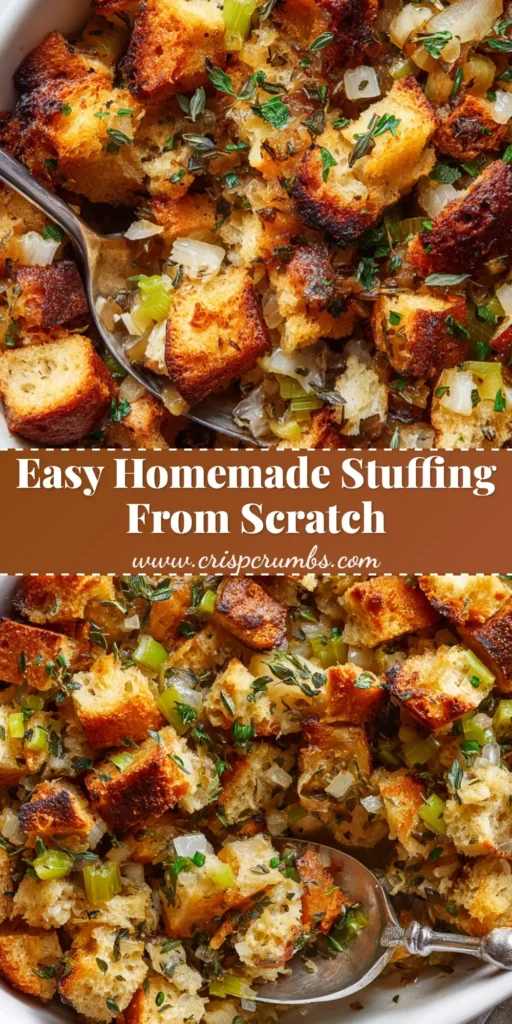
Do not forget to save this masterpiece for your next big feast. Pin the image above to Pinterest and share it with your fellow enthusiastic home cooks!